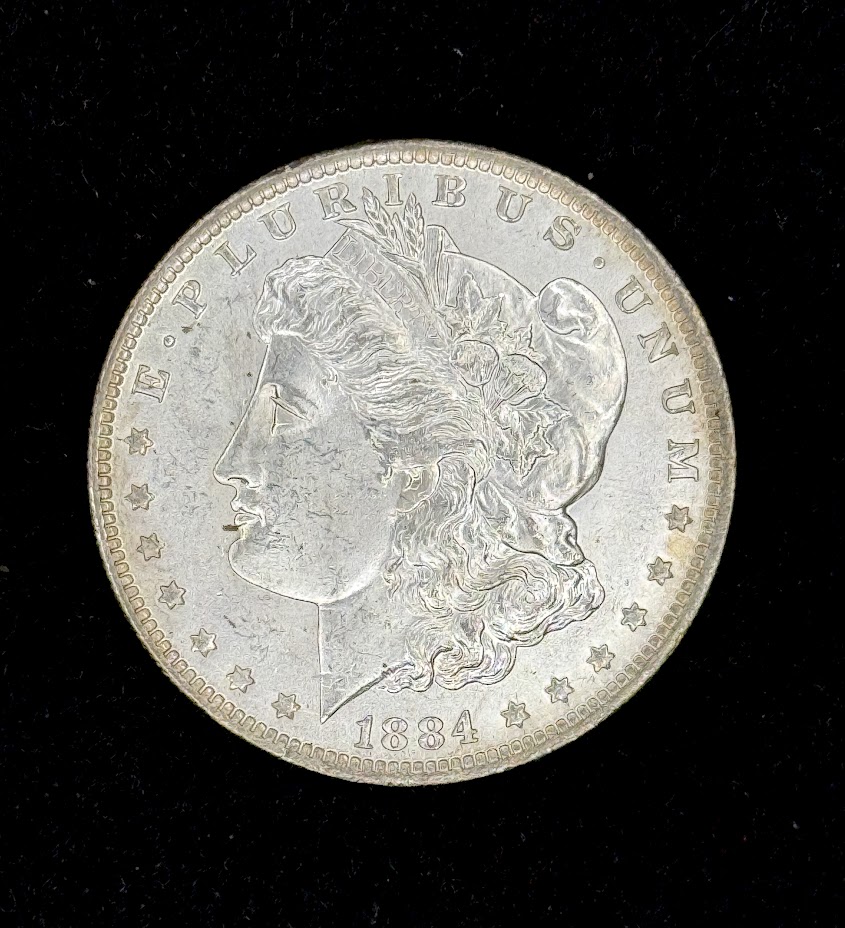
1884 O Rainbow Toned Morgan Dollar
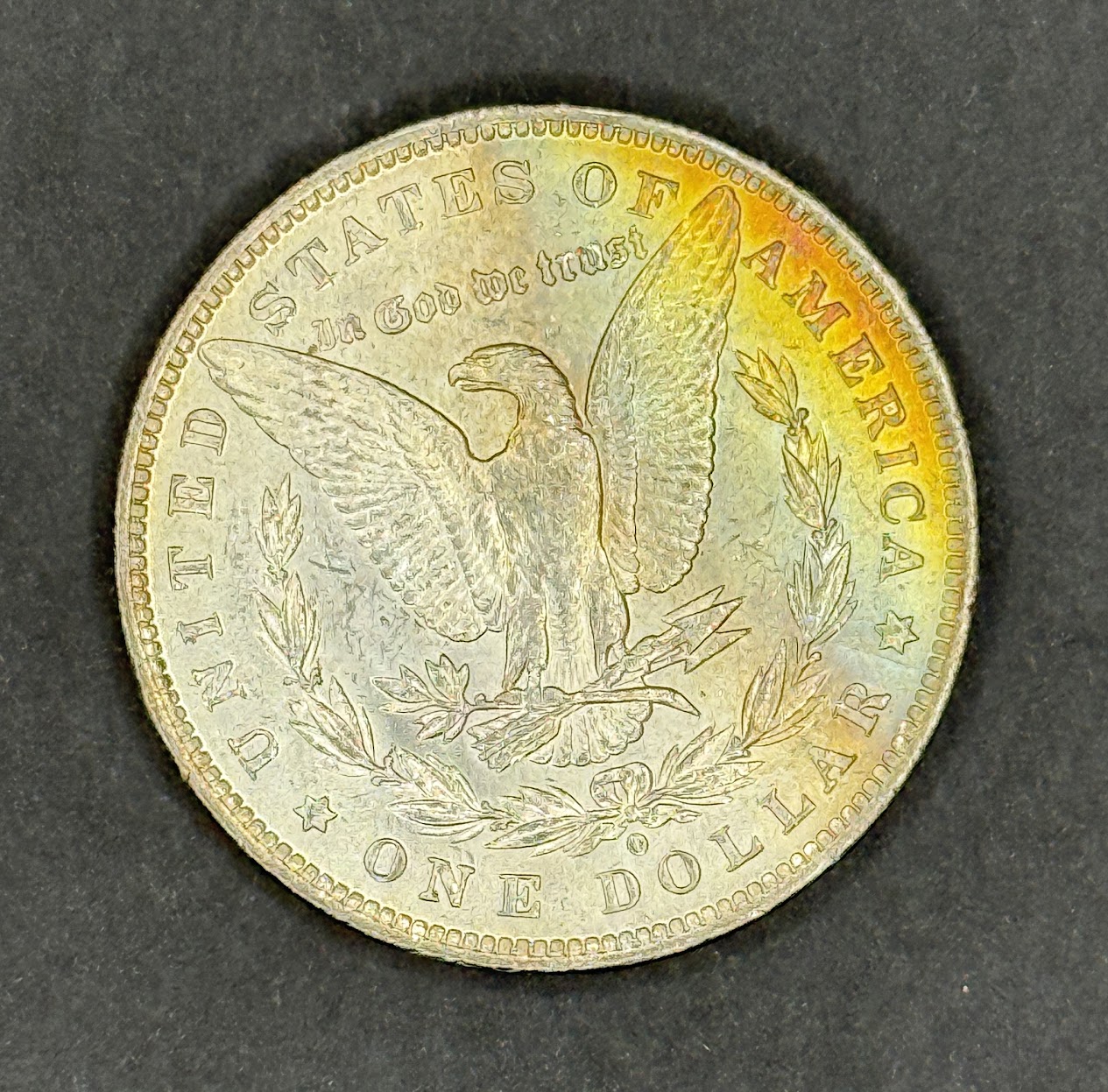
How a Rainbow Toned 1884-O Morgan Dollar Taught Me to Buy What I Love
Seven months ago, I was deep into learning about the silver market. Like a lot of people, I assumed the smart move was to stack bullion. Then the owner of my local coin shop gave me advice that changed how I think about it. He told me I would come out further ahead collecting Morgan Dollars in brilliant uncirculated condition than simply stacking silver.
I took his advice and picked up a few. Then, while I was looking through a tray of Morgans, he disappeared into the back room and came out with a coin that stopped me in my tracks. It was an 1884-O Morgan Dollar with rainbow toning on the reverse.
What Made This Coin Stand Out
The 1884-O is a common date for Morgan’s. What sets this one apart is the combination of strong mint luster and eye appeal.
The coin is uncirculated with a great mint luster. When you tilt it in the light, it flashes the way a fresh Morgan should. The reverse carries rainbow toning across about a third of the surface, running from reds and golds into blues and greens. The rest of the coin stays bright, which makes the color pop even more.
Here is what I noticed first:
- Frosty mint luster that has held up for well over a century
- A rainbow gradient that moves from warm reds and golds to cool blues and greens
- Toning that covers about one third of the reverse, leaving plenty of bright silver for contrast
- Overall eye appeal that photos only partly capture
The Story Behind the Colors
This is the part I love most. The New Orleans Mint stored its coins in canvas bags in that era. I can picture this dollar sitting against the outside edge of a bag, where the conditions had to be just right for the toning to develop. Nobody planned it. Time, environment, and where one coin happened to rest all came together to create something no two coins will ever match exactly.
That is why I think toned Morgans appeal to collectors who care about history. A bright white coin looks the way it did when it left the mint. A toned coin carries a record of where it spent the last 140 years.
My Experience Buying It Raw
I paid $88 for this coin at the time, which was a fair premium over spot. The mint luster justified a premium over a typical bullion price, and the rainbow toning added to it.
The coin is raw, meaning it has not been graded and sealed by a third-party service. It carries a noted grade of MS65, and I trust that grade. The shop owner used to grade for PCGS, and I have built a relationship with him over time. That trust matters. When you buy raw, you are relying on the opinion of the person selling to you, so who that person is matters a great deal.
Why I Did Not Slab It
It would look great in a holder, but I decided it was not worth the cost to go from raw to graded. There are a lot of 1884-O Morgans available in uncirculated grades, so the date will not command a big premium just because it has a slab. The grading fee would eat into the margin without changing the story much.
In general, I do lean toward slabbed coins. The work has already been done, and you know exactly what you are getting. If you are buying from someone you do not know well, a graded coin is the safer path. My situation is different because I know and trust this dealer.
The Lesson I Learned the Hard Way
When I bought this coin, I hadn’t done my homework on what it would be worth if the grade did not go the right way. Looking back, I got lucky that I trust the dealer and love the coin. Going forward, I research every purchase first.
Before I buy a raw coin now, I make sure I would still be in it at the right price even if the grade came back a point or two lower. That one habit protects you from overpaying for a grade you cannot verify.
White Morgans vs. Toned Morgans
Plenty of collectors prefer bright white Morgans, and I understand why. They stand out, and they are what many people picture when they think of a perfect uncirculated dollar. Personally, I prefer rainbow colors, especially when they tell a story like this one does.
Both styles have buyers. The key is knowing which one you are drawn to and buying with your eyes open about the price.
How I Priced This Coin for Sale
I looked at sold listings for comparable coins and started with a price that gives me a fair margin. I am not trying to squeeze every dollar out of it. I am trying to price it fairly for the quality of the coin and what I paid.
If you are selling a coin like this, here is what I would suggest:
- Look at sold listings, not just asking prices
- Compare coins with similar luster, grade, and toning
- Know your cost and decide on a fair margin before you list
- Be honest in your description about the coin being raw and who graded it
My Advice for New Collectors
If you are just starting out, here is what I wish someone had told me sooner:
- Build a relationship with a dealer you trust and ask questions
- Learn to judge luster and eye appeal in hand, not just in photos
- Research a coin’s value before you buy, including the downside if the grade is lower
- Do not overpay for a slab on a common date unless you need certainty of the grade
- Buy coins you like
That last one matters most. If you like a coin, someone else might too. Collecting works best when you enjoy what you own, and it is easier to sell something that other people also find beautiful.
Final Thoughts
This 1884-O Morgan has been one of my favorite finds since I began collecting. It started with a shop owner’s advice, grew into an education about grading, pricing, and research, and ended up with a coin I can still picture resting against the edge of a canvas bag in New Orleans. I am learning as I go, and I plan to keep sharing what I find along the way.